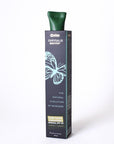
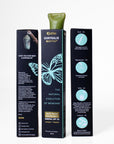
Crème solaire visage SPF 30 à base de bêta-glucane dérivé d'algues

$23 Soldes
Ajout au panier Ajouté au panier

Sans traces blanches, sans plastique, uniquement une protection solaire minérale, une hydratation et une réparation à base d'algues.


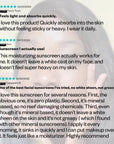
Nos clients apprécient notre crème hydratante SPF 30 à base de bêta-glucane d'algues pour sa capacité à offrir une protection solaire efficace, même sous le maquillage, sans laisser de traces blanches ni de film gras après la baignade. Et bien sûr, ils apprécient qu'en tant que crème solaire minérale, elle contribue à la protection de la vie aquatique et à la réduction des emballages plastiques ! Nous sommes convaincus que la protection solaire est LE geste quotidien indispensable pour protéger sa peau, et la plupart des dermatologues sont du même avis ! « DiAnne Davis, dermatologue médicale et esthétique à Dallas, au Texas, affirme que protéger sa peau est aussi essentiel que se brosser les dents … et que prendre l'habitude d'appliquer de la crème solaire est la meilleure façon de garantir une protection 24 h/24 et 7 j/7. Et ce n'est pas qu'une simple formule. Davis explique qu'il faut toujours penser à se protéger du soleil, même en hiver, par temps nuageux, et même, oui, à l'intérieur près d'une fenêtre. Cliquez ici pour plus de conseils sur la protection solaire. »

Santé Canada NPN n° 80140888

Achetez-le avec

 
%3Cp%3EGagnez%20[points_amount]%20lorsque%20vous%20achetez%20cet%20article.%3C/p%3E

FAQs

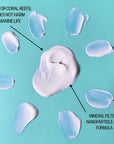
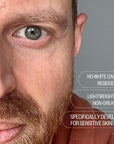
Mineral filters; nanoparticle-free formulaSafe for coral reefs; do not harm marine lifeNo white cast or residueLightweight and non-greasySpecifically developed for sensitive skin

SCENT: Vanilla + Coconut

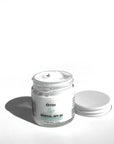
Each pod holds 42 ml of sunscreen

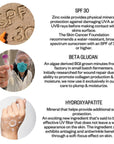
Hydrolyzed beta-glucan

Zinc oxide (19%): provides physical mineral protection against damaging UVA and UVB rays

Hydroxyapatite: mineral that helps provide additional sun protection

Shea butter: forms a protective barrier to help maintain skin’s moisture levels

Prickly Pear seed oil: full of antioxidants; helps promote healthy cell renewal and soothe skin

Jojoba + Argan oil: provide nourishment and hydration

Aloe Barbadensis (Aloe Vera) leaf extract, Hydroxyapatite, Simmondsia Chinensis (Jojoba) seed oil, Argania Spinosa Kernel (Argan) oil, Opuntia Ficus Indica (Prickly Pear) seed oil, Coco-caprylate (Coconut), Theobroma cacao seed (cacao) butter extract, Butyrospermum Parkii (Shea) butter extract, Cetearyl Olivate, Sorbitan Olivate, Prunus Amygdalus Dulcis (Sweet almond) oil, Glycerin, Sucrose Laurate, Benzyl alcohol, Potassium sorbate, HYDROLYZED BETA-GLUCAN, Rosemary Oleoresin.

ACTIVE INGREDIENT: Zinc Oxide (19%)

Apply liberally to the face 15 minutes before sun exposure.Reapply at least every 2 hours or after 80 minutes of swimming or sweating, and immediately after towel-drying.

Research shows that zinc oxide - the active ingredient in our sunscreen at 19% - filters across the full UV spectrum, including UVB rays (which cause sunburn) and both UVA II and deep UVA I rays (which penetrate further and contribute to premature aging).

High SPF scores don't tell the whole story, since SPF only measures UVB protection. High-zinc mineral formulas have been shown to deliver meaningfully stronger UVA coverage than most North American sunscreens. Health Canada classifies zinc oxide as a natural ingredient and recognizes it as a physical UV filter.

That's a reasonable question. Some research has found that zinc oxide can trigger photodegradation of other UV filters in hybrid sunscreens. But that applies to formulas that mix zinc oxide with chemical filters and ours uses zinc oxide as its sole active, so there's nothing to degrade. Zinc oxide itself is highly photostable and doesn't break down under sun exposure. For best results, keep the lid on your jar when not in use and store away from direct sunlight, which is the same good habit you'd have with any sunscreen.

When you subscribe to our subscription plan, we ship you products as often as you choose.Cancel anytime.

Protégeons nos récifs !

L'oxybenzone et l'octinoxate, ingrédients courants des crèmes solaires chimiques, se sont révélés toxiques pour les récifs coralliens, même à très faibles concentrations. Ces substances chimiques peuvent perturber le développement des larves de corail et contribuer à leur blanchissement.

Prévenir le blanchiment des coraux

Le blanchissement des coraux se produit lorsque ces derniers expulsent les algues symbiotiques vivant dans leurs tissus, ce qui les fait blanchir ou pâlir. Il s'agit souvent d'une réaction au stress, et certains produits chimiques contenus dans les crèmes solaires, notamment l'oxybenzone, contribuent au blanchissement des coraux.

Notre crème solaire minérale prévient le blanchiment des coraux et contribue ainsi à la protection de nos écosystèmes.